Protecting Kids from Scald Injuries and Burns
May 13, 2026Did you know 435 children a day are seen in the emergency department for burns and two children a day die from burn-related injuries? Younger children are more at risk for scald injuries from hot liquids or steam, while older children are more likely to be burned by direct contact with fire. Hot water is the most common source of burn injuries involved in more than 1 in 5 of burns. Children less than 4 years of age made up 51.5% of burn cases with the highest age for 1 year olds. Prevention and knowledge are powerful tools to keep our kids safe and healthy. Discussing how to prevent these burn injuries can keep our kids home and enjoying delicious food safely.
Common causes of scalds in children
- Hot drinks (coffee, tea or soup) being knocked over or pulled down
- Especially instant noodles being spilled when it is pulled out of the microwave
- Water from saucepans, kettles, jugs and thermoses
- Steam from microwaved food
- Hot tap water from sinks or tubs
- Coal ashes
- Friction burns – for example, treadmills
- Lighters and matches
- Fat and hot cooking oil
- Steam and vapor
- Vehicle exhausts
Simple Steps to Prevent Scald Injuries
In the Kitchen:
- Keep hot drinks and foods well out of reach — never place mugs or bowls near the edge of a counter or table
- Use the back burners on the stove when possible, and turn pot handles inward
- Create a “kid-free zone” of at least 3 feet around the stove or oven
- Avoid carrying your child while cooking or holding a hot beverage
At Bath Time:
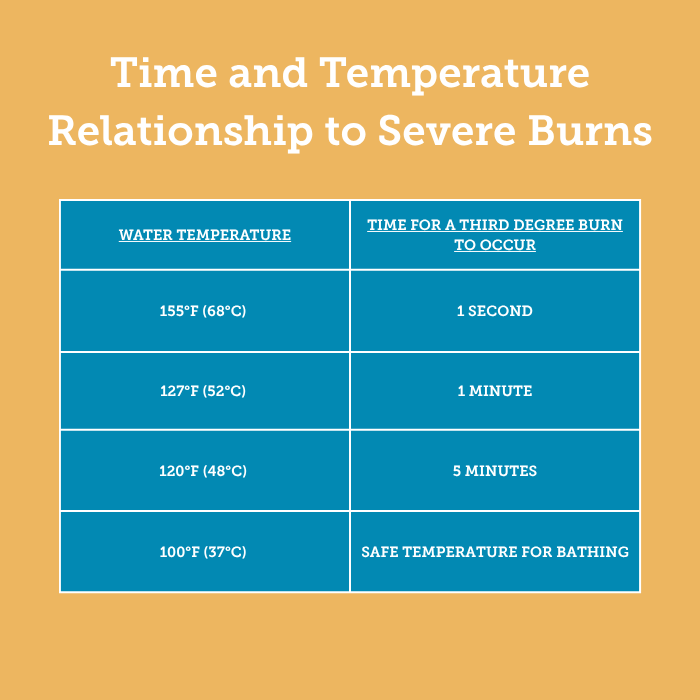
- To reduce the risk of injury to your child from hot water scalds, it is recommended that you have a device installed to control the delivery temperature of bathroom hot water to a maximum of 120°F (49°C) or less to prevent scalding. See the guide below to best know the time and temperature relationship to severe burns
- Always test bath water with your wrist or elbow before placing your child in
-
Fill the tub with cold water first, then add warm — not the other way around
Around the Home:
- Keep appliances that heat water (like kettles, instant pots and humidifiers) out of children’s reach
- Teach older kids about the dangers of hot liquids and how to handle them safely
- Never leave a child unattended near running water or cooking surfaces
What to do if a Scald Happens
- Remove your child away from the source of heat immediately
- Cool the burn under cool (not cold) running water for 10–20 minutes
- DO NOT apply butter, oil or creams
- Cover the area with a clean, dry cloth. You can apply cool running water but AVOID applying ice or iced water as this can delay the healing process
- Seek medical attention by calling 911 if the burn is large, blistered or on the face, hands, genitals or joints
And as always, please call your pediatrician for any concerns! Education and prevention are powerful tools to having a fun and safe kitchen! For more statistics and prevention tips, click here.