July 2026 State of Our Children 360 Newsletter
In this month's edition, get an in-depth look and perspectives from subject matter experts about the rise in popularity of e-bikes and micromobility devices and the risks they pose to children's health.
Articles in this issue:
- E-Bikes and Injury Prevention: Addressing an Increasing Concern in Pediatric Trauma
- What Every Caregiver Should Know about E-Bike Safety
- E-Bikes Are NOT Toys: An Appeal From a Law Enforcement Leader
- Additional Resources
E-Bikes and Injury Prevention: Addressing an Increasing Concern in Pediatric Trauma
by Dr. Shannon Castle, Medical Director of Pediatric Trauma, Valley Children's Hospital
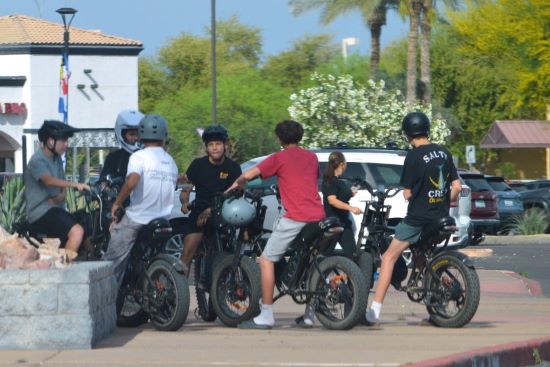 The rapid rise in electronic bicycles (e-bikes) across all age groups has introduced a new source of preventable injury in both children and adults. Over the last five years, the frequency of e-bike-related injuries among children and adolescents has increased dramatically. E-bikes and scooters may offer convenience and accessibility, but higher speeds and acceleration compared to traditional bicycles significantly increase the force involved in crashes. Riders often perceive them as equivalent to standard bikes and may not take the same precautions they would with a motorized vehicle, including consistent helmet use and situational awareness in mixed traffic environments.
Trauma departments and pediatric clinicians around the country are observing injury patterns associated with e-bike incidents. These injuries include higher rates of traumatic brain injuries, complex facial fractures and serious extremity injuries requiring operative intervention. At higher speeds, crashes are also more likely to result in multisystem trauma, including chest and abdominal injuries. Contributing factors include limited rider experience, minimal training requirements and frequent use in crowded urban settings alongside pedestrians and motor vehicles.
Trauma departments and pediatric clinicians around the country are observing injury patterns associated with e-bike incidents. These injuries include higher rates of traumatic brain injuries, complex facial fractures and serious extremity injuries requiring operative intervention.
As e-bikes become increasingly common, there is a clear opportunity for prevention through community partnership. Emphasizing helmet use, rider education and safe-speed practices is critical. In parallel, evidence-based policy, infrastructure adaptation and public awareness will be essential to reducing injury risk. By working together across healthcare, public safety and community organizations, we can help ensure that the benefits of e-bikes are not overshadowed by preventable harm.

About the Author
Board certified in general surgery, surgical critical care and pediatric surgery by the American Board of Surgery, Dr. Shannon L. Castle, FACS, FAAP joined Valley Children’s Specialty Medical Group as a pediatric surgeon in 2018. Dr. Castle serves as Medical Director for Trauma at Valley Children's Hospital and is active in regional trauma collaboration and education. She is active in teaching UCSF-Fresno surgical residents as well as the pediatric trainees at Valley Children's.
Read more about Dr. CastleWhat Every Caregiver Should Know about E-Bike Safety
by Kristina Pasma, BSN, RN, CPSI, Trauma Nurse Liaison at Valley Children's Hospital
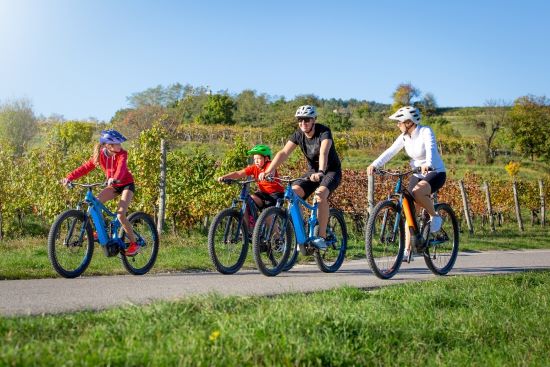 Spring, and very soon summer, are upon us here in the Central Valley. As the weather warms up, more children have taken the opportunity to do what they do best, playing outside. Bikes, scooters, skates and everything with wheels dusted off the shelves and put into action. As you and your children enjoy the spring weather, Valley Children’s would like to make you aware of a little-known danger, micro mobility devices such as e-bikes and e-scooters. Most caregivers are not aware that they are not the “toy,” they think they are and children should use them with caution.
Since 2023, Valley Children’s and trauma centers around the nation have noticed an uptick in the number of children injured on micro mobility devices. Many have severe injuries requiring hospitalization, surgery and/or ICU care and they represent 3% of all trauma patients from 2023 to the present day. Of those requiring care by the Valley Children’s Trauma Team, only 25% of them were wearing a helmet and these children live in communities all over the Central Valley including both rural and urban communities.
Before letting your children take a test ride, there are important things to keep in mind. If it has wheels, they should always wear a helmet every time they ride. In California, children under the age of 16 must wear a helmet when riding a standard bicycle. California law requires e-bike riders to be at least 12 years old and riders under eighteen must wear a helmet. There is no minimum standard for e-bike helmets, but we advocate for multi-directional impact protection system (MIPS) level protection due to the increased speeds of devices traveling 20mph or more and resulting in increased injury risk at those speeds. Parents must set the standard for helmet use and model their behavior, even when riding a standard bicycle.
Since 2023, Valley Children’s and trauma centers around the nation have noticed an uptick in the number of children injured on micro mobility devices. Many have severe injuries requiring hospitalization, surgery and/or ICU care and they represent 3% of all trauma patients from 2023 to the present day.
E-bikes and scooters are not toys. Before purchasing one, do your research. There are many manufacturers who claim that devices are e-bikes, but they do not meet the California definition including those overseas selling e-bikes online which have throttles reaching speeds greater than 25mph. These devices do not meet the legal definition of an e-bike and should not be considered one. There are also several classes for e-bikes. With Class 1, the motor assists when the riders are pedaling and can reach speeds up to 20 mph. Class 2 includes a throttle allowing the rider to use the motor with or without pedaling and can also reach speeds up to 20 mph. In California, you must be at least 16 years old to ride a Class 3 e-bike which may or may not have a throttle and can reach speeds up to 28 mph. Parents and children should attend a safety class before using any of them.
E-bike and e-scooter riders should follow all bicycle laws. A new law passed in California in 2025 requiring a rear red reflector or light that is visible at all hours of the day, unlike standard bicycles which are required at night. Sidewalk rules vary from city to city, but we recommend that riders travel no faster than 10 mph on the sidewalk, where permitted, and reduce their speed to 5 mph when pedestrians are present. Riders should also provide an audible signal, such as a bell, horn or verbal notification when passing pedestrians to reduce the risk of collision. Riders should follow all applicable bicycle rules of the road. We recommend wearing bright colored clothing and closed-toed non-slip shoes such as sneakers. They should avoid going barefoot, wearing sandals or wearing Crocs.
From all of us in Valley Children’s Trauma Program, we wish you a healthy and safe summer season.
About the Author
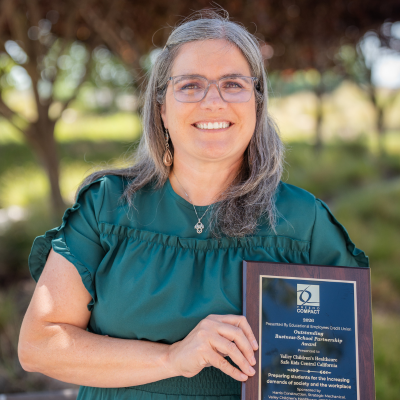
Kristina Pasma joined Valley Children’s Hospital in 2002 as a registered nurse in the emergency department. Her passion for keeping children safe led her to join the Trauma Program in 2013. As Valley Children’s injury prevention coordinator and as the Safe Kids Central California coordinator, Kristina works with a variety of individuals within the walls of the hospital and out in the community. Kristina is a lead child passenger safety technician instructor and a Safe Travel for All Children instructor. As a wife and mother of three, she is dedicated to keeping children in the Central Valley safe from unintentional injury.
E-Bikes Are NOT Toys: An Appeal from a Law Enforcement Leader
by Chief Mindy Casto, Fresno Police Department
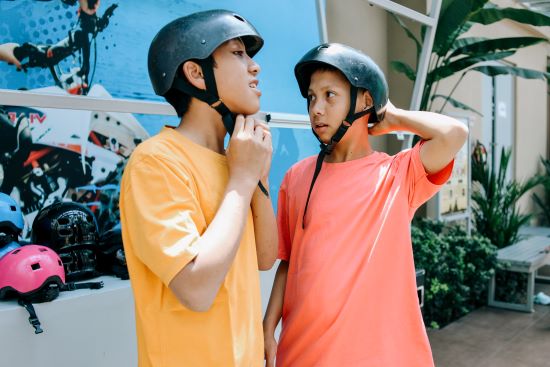 Watching a child ride their first bike is a memorable experience for many. Most of us who rode bikes as kids know the basic “rules of the road” when it comes to bike safety and try to teach those same safety lessons to our children.
A troubling trend is emerging in communities nationwide: children as young as 8 are riding e-bikes. On sidewalks, streets, trails and in parks, many are traveling 20 to 30 miles per hour — or faster — with little training, limited awareness of the dangers and risks, and little understanding of the rules of the road.
It is my privilege to serve as Fresno’s police chief. In this role, I am privileged to witness heroic and selfless acts from officers and citizens alike in keeping our communities safe. And, unfortunately, I also witness moments of intense sadness and tragedy and, recently, many of those tragic moments have involved kids, e-bikes, serious injuries and sometimes death.
We can no longer look away.
There are rapidly growing dangers associated with e bikes, mini motorcycles and other motorized two-wheelers in our communities. These devices can appear harmless — fun, efficient, popular among young people, and, in many cases, an easy “click” away to buy online — but the risks are far greater than many realize. And they are NOT “just like riding a bike.”
Recent tragedies in Fresno have placed this issue in painful focus for our community. Other communities across the Valley have similar experiences. And most do not end well.
California’s E Bike and Mini Bike Laws
California regulates electric bicycles through a three-class system designed to keep riders — and everyone around them — safe:
- Class 1: Pedal assist only (the motor works only when pedaling), maximum assisted speed up to 20 mph
- Class 2: Throttle enabled (the bike can move without the rider pedaling), maximum assisted speed up to 20 mph
- Class 3: Pedal assist only; maximum assisted speed up to 28 mph; must have a speedometer; riders must be 16 or older and must wear a helmet; often restricted from certain trails and bike paths
- Helmets are mandatory for all riders under 18, and all e bike riders must obey bicycle traffic rules.
- E bikes must also be capped at 750 watts. Recent legislative changes now require a rear red reflector or flashing light visible day and night and prohibit tampering with speed limiting devices.
Why These Machines Aren’t Toys
E bikes and mini motorcycles can accelerate quickly and travel at speeds comparable to motor vehicles. They require balance, judgment, maturity and traffic awareness that many young riders simply have not yet developed. Their small size and low profile also make it harder for drivers to see, especially at night.
The sheer speed of these e-bikes changes the nature of injuries if a child was to fall off or, even worse, be involved in a collision with another car, another cyclist or strike a pedestrian walking on a trail or the sidewalk. Falling off your bike that goes 10 mph is one thing. Falling off a motorized bike going 25 mph is quite another.
A Direct Appeal to Parents and Guardians
As a police chief, and as a mother, I am appealing to every parent, caregiver or guardian in our community. Take this issue seriously. Your vigilance and boundaries may save a life.
Before purchasing an e-bike for your kids and allowing a child to operate an e bike, please consider:
- Are they old enough — and mature enough — to follow traffic laws?
- Do they understand defensive riding and situational awareness?
- Do they always wear a helmet and required safety gear?
- Are they riding in safe, well-lit areas?
- Are you actively supervising their use?
- Are you providing instructions on how to ride them and what to do in case of an emergency?
Fresno Police Department’s Call to Action
Fresno and every community in this Valley is at a crossroads. The lives we have lost to e-bike accidents were not random misfortunes — they were preventable tragedies. We must take collective responsibility and make changes before more lives are lost.
I'm speaking as Fresno's police chief, although I am sure every police chief in the Valley would share similar thoughts. So, I ask you to:
- Reinforce helmet use and protective equipment
- Just like “distracted driving,” do not allow e-bike riders to use while on a cell phone or using ear buds
- Ensure your child only uses devices appropriate for their age
- Understand and follow California’s e-bike laws
- Restrict night riding and high traffic routes
- Treat every motorized two wheeler with the seriousness it deserves
Honoring the young lives we have lost means taking meaningful steps to protect others. Let us work together — parents, schools, city leaders and law enforcement — to prevent future tragedies and safeguard our children. Their lives, and their futures, depend on it.
About the Author
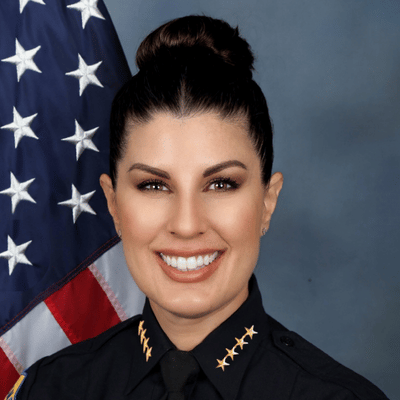
Chief Mindy Casto is a dedicated law enforcement professional with nearly three decades of experience. She is committed to reducing violent crime, enhancing service levels, and strengthening professionalism in the Fresno Police Department (PD). A proud Central Valley native, she exemplifies how a single ride-along gave way to a career that rose through the ranks of the Fresno PD. Now, Chief Casto is responsible for the safety of California’s fifth-largest city, with a population of over one million.
Additional Resources
Electric Bicycle Safety and Training | Rise 360
Test your knowledge of e-bike safety and training with this online course from Rise 360.
Take the quizAsk the Pediatrician: Are Electric Bikes (E-Bikes) Safe for Children?
Dr. Phyllis Agran answers this increasingly popular question for the American Academy of Pediatrics' HealthyChildren.org website.
Read the article