Summer Camp Essentials: A Pediatrician's Guide to Keeping Kids Safe and Happy
August 18, 2026Categories: General Information, Safety and Injury Prevention
Summer camp season is here! Whether your child is heading to day camp or sleepaway camp, a little preparation goes a long way. As a pediatrician, here are the essentials every parent should know.
Sun Safety
It is crucial to apply broad-spectrum sunscreen (SPF 30+) at least 15–30 minutes before going outside, and reapply every 2 hours, or sooner after swimming or sweating. Don't forget the ears, neck and tops of the feet! Pack a wide-brimmed hat, sunglasses and lightweight long sleeves for extra protection, and encourage shade during peak hours (10 AM–4 PM). Remember: Sunscreen is safe for children 6 months and older, and for younger infants, rely on shade and protective clothing.
Hydration
Kids heat up faster than adults and don't always recognize when they're thirsty. Send a labeled reusable water bottle and remind your child to drink throughout the day. Water is the best choice for hydration. Remember to watch for signs of heat exhaustion, including heavy sweating, nausea, dizziness or fatigue.
Bug Protection
Use insect repellent with DEET (10–30%, safe for children over 2 months) or picaridin. Oil of lemon eucalyptus is an option for kids 3 years and older. We recommend applying sunscreen first, then insect repellent on top, rather than using combination products. Dress children in light-colored clothing so ticks are easier to spot, and perform a full-body tick check every evening. Pay attention to the scalp, the area behind the ears and the groin. If you find a tick, remove it with fine-tipped tweezers, pulling it straight up with steady pressure.
Medications and Medical Needs
Send all medications in their original, labeled containers, with written instructions and a signed authorization form. Children with asthma need a rescue inhaler and an action plan at camp. A child with severe allergies needs two epinephrine auto-injectors and a written anaphylaxis plan. Counselors must be trained in using these medications. Camps should ideally use electronic medication administration records to reduce errors. Also, make sure to update your child's immunizations before camp, including the HPV vaccine if they are eligible.
Water Safety
Drowning is the leading cause of injury-related death in children ages 1–4, and it remains a significant risk for older kids as well. Confirm the camp has certified lifeguards during all water activities. Ensure your child knows how to swim; The AAP supports swim lessons for children starting at age 1. Remind them of the essential water safety rules: no running near the pool, no diving in shallow water and always swim with a buddy. If boating, use U.S. Coast Guard–approved life jackets, as inflatable toys are not safety devices.
Homesickness
Speak positively about camp beforehand, and practice short separations, such as sleepovers. Sending a comfort item from home can help ease the transition. Avoid making a "pick-up deal" (promising to come pick them up if they're unhappy), as this can actually worsen homesickness. If your child calls upset, remain calm and validate their feelings. Most cases of homesickness resolve within a day or two.
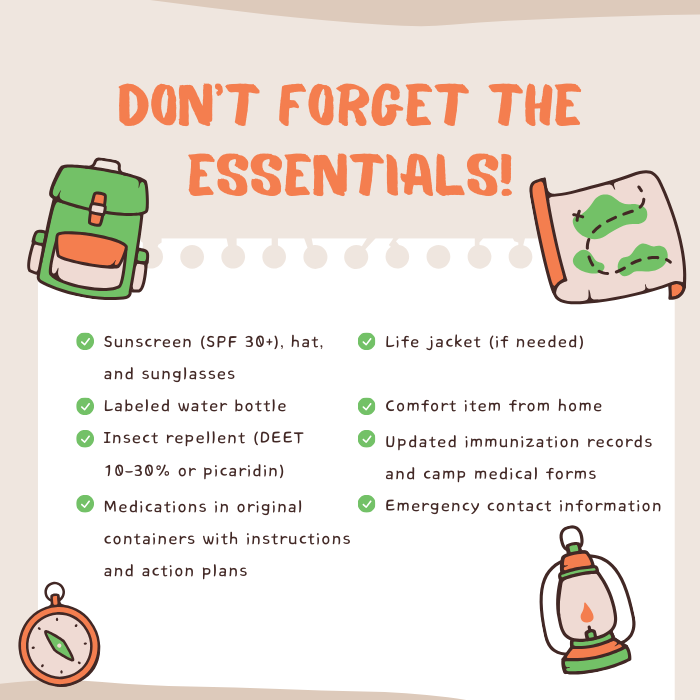
Quick Packing Checklist
Use this guide for a quick reference when packing!
Schedule a pre-camp checkup with your pediatrician to update vaccines, refill prescriptions and ensure your child is ready for an active summer. Have a wonderful camp season!