Creating Resolutions with Your Kids and How to Stick to Them
December 30, 2025Categories: Parenting
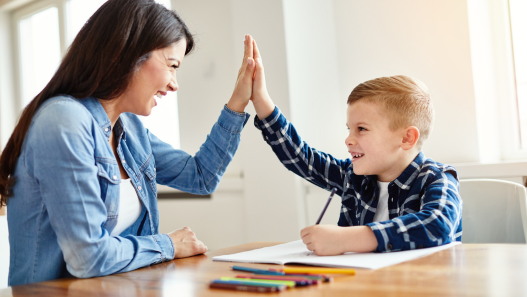
Around the start of every new year, adults start talking about resolutions. Kids on the other hand have other things in mind; surviving the winter cold, going back to school and the emotional whiplash of returning to routine.
Kids may not be in the mindset of "New Year, New Me" and that's okay! Rather than seeing this as a motivation problem, it's helpful to reframe it as a developmental one.
As a pediatric psychologist - and former elementary school teacher - I encourage parents to think about New Year goal setting for kids less as resolutions and more as developmentally appropriate experiments. Research consistently shows that children build skills best when goals are concrete, intrinsically motivating, supported by adults and embedded in play and everyday life.
Below is a brain-based playful way to approach goals for children at different ages!
Where to Start
Before you set any goals, here are a few big rules:
Regardless of age, child-friendly goal-setting works especially when goals are:
- Process focused, not outcome focused
- Playful or experimental. Play isn't optional, it's how children integrate emotional land behavioral skills neurologically
- Short-term and flexible
- Collaborative
- Kind
Toddlers & Preschoolers (Ages 2-4): Goals as Routines
At this age, children aren't setting verbal goals - and they shouldn't be! Their "goals" show up as repeated experiences that build language, regulation and autonomy.
Helpful goal areas:
- Waiting
- Turn-taking
- Using words or gestures instead of big physical reactions
- Practicing simple calming with an adult
What it looks like:
- Acting out big feelings with stuffed animals
- Songs and movement games during transitions
- Visual routines instead of verbal reminders
Early Elementary (Ages 5-7): Goals as Skill-building Adventures
Children in this age range love mastery but still need structure. Goals work best when they're concrete, imaginative and immediately reinforced.
Developmentally appropriate goals:
- Practice calming my body when I'm frustrated
- Try a hard thing before asking for help
- Use kind words at home
What it looks like:
- Tuning goals into "superpowers"
- Earning badges for practicing not succeeding
- Games that explore feelings and coping skills
Upper Elementary (Ages 8-11): Goals as Experiments
This is often the sweet spot for goal-setting. Kids can reflect, plan and track progress, but sill benefit from adult scaffolding.
Helpful goals:
- Make homework less stressful
- Practice being a good friend
- Learn what helps when I'm overwhelmed
What it looks like:
- Weekly, low-pressure check-ins
- Scaling questions ("How did I go from 1-10")
- Letting kids choose which coping skills to practice using a "menu" approach
Middle School (Ages 12-14): Goals as Identity Practice
Middle schoolers are asking big questions about who they are. Goals that feel imposed will usually be rejected - sometimes dramatically.
Helpful Goal Areas:
- Managing stress and emotions
- Navigating friendships
- Balancing effort and rest
What it looks like to support them:
- Stay curious, not corrective
- Normalize struggle
- Focus on insight and effort rather than outcomes
High School (Ages 15-18): Goals as Self-directed Growth
Teens benefit from mentorship, not micromanagement.
Meaningful goal areas:
- Stress management and burnout prevention
- Time and energy balance
- Managing values-aligned decisions
Helpful questions:
- "What kind of person do you want to be practicing becoming this year?"
- "What skills would make life feel a little easer right now?"
If your child changes their goal, forgets about it, resists it, struggles or needs reminders, it does not mean the goal failed! It means development is happening. The real purpose of goal setting isn't compliance or achievement it's helping children learn! The process of goal-setting helps children learn they can try, adjust and grow! That's a goal worth practicing for a lifetime.