Call Me Maybe: The Phone Numbers Every Teen Needs in Their Phone
February 3, 2026Categories: Parenting
Handing your teen a cellphone can feel like a milestone - and a mini heart attack. On one hand, its freedom, independence and connection. On the other hand, you’re trusting a glass rectangle to help them navigate emergencies, peer pressure and real-world problems. How can we help our teens navigate this chaos?
One of the simplest and most overlooked safety steps you can take is making sure the right phone numbers are saved in your teen’s phone before they need them. Here’s a practical, must-have list of phone numbers and why each one matters.
Numbers to Save
Parents or Guardians
Make sure all primary caregivers are saved with full names, phone numbers and a backup contact method if possible. In an emergency, teachers, police or medical staff may need to quickly identify and contact you. Consider adding an “In Case of Emergency” contact into your teen's phone in case someone needs to access it.
A Trusted Backup Adult
This could be an aunt, uncle, grandparent, close family friend or neighbor. This is the person your teen can call if you’re unreachable, they’re uncomfortable calling you or they need help immediately.
Emergency Services
Your teen should know how and when to call emergency services (911 in the U.S.). Teens often hesitate to take this step but remind them that it can save your child or someone else’s life. Talk through when it’s appropriate and reassure them it’s okay to call if something feels unsafe.
Poison Control
U.S. Poison Control is: 1-800-222-1222. Free, confidential and available 24/7 for medication errors, accidental ingestion or chemical exposure.
School Contacts
Depending on age and independence, save the numbers of the school front office, counselors, the nurse or sports coaches. These are often the first adults involved during the school day. It is important to note that while it might be convenient for your teen to have a teacher or coach’s phone number, there are risks to one-on-one conversations as it can create an environment for inappropriate conversations. Become familiar with your teen’s school policy on using appropriate tools for communication to prevent misconduct.
A Ride-Home-No-Questions-Asked Contact
If your teen ever feels unsafe or overwhelmed, they should have someone they can call without fear of immediate punishment. This only works if the agreement is real and judgement free.
Primary Care Provider or Pediatrician
Helpful for health questions, medication concerns and urgent appointments. This also encourages teens to take ownership of their health and seek help when needed for health issues.
Siblings or Close Relatives
Older siblings or trusted relatives can be a lifeline when your teen needs advice but isn’t ready to talk to a parent.
Mental Health Support Lines
988 Suicide & Crisis Lifeline (Call or Text 988). Saving support numbers doesn’t plant ideas - it plants help.
Other Important Information to Save
In the Notes section of your teen's phone, include their home address, parent or guardian full names, allergies and medical conditions. First responders often check phones and this information can be crucial in an emergency.
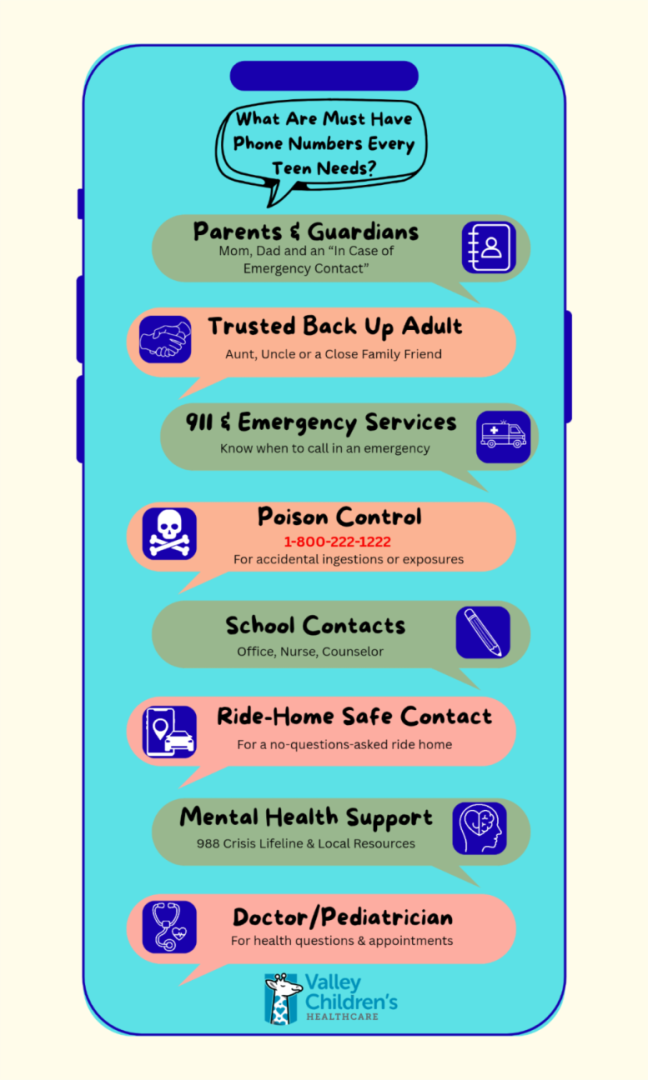
Use this helpful graphic to quickly navigate what numbers should be in your teen's phone!
What comes next?
Saving numbers is only half the work. Talking through how to use them matters just as much. Have open, calm conversations with your teen about what different emergency situations might look like (medical emergencies, feeling unsafe at a party, being stranded without a ride or witnessing someone else in danger) and who they should call first in each case. Emphasize that safety comes before getting in trouble, and that asking for help is always the right choice. Practicing these conversations ahead of time helps teens act faster and with more confidence when it really counts. Taking a few minutes now can make a life-saving difference later.