3 Sunburn Tips Every Parent Should Know
August 28, 2026By: Sonia Dubey, MD
Categories: General Information, Conditions
Sunny days are a great time for children to play, swim, explore and enjoy the outdoors. But too much sun can sometimes lead to a painful sunburn. A sunburn is more than a temporary skin problem. Repeated sun exposure and sunburn during childhood can increase the risk of skin damage and skin cancer later in life.
What is a sunburn?
A sunburn happens when the sun’s invisible rays (UV rays) damage the skin. A mild sunburn causes the skin to become red, warm and painful, but does not cause any blisters. This is considered a first-degree sunburn and only affects the epidermis (top layer of the skin). A first degree burn usually heals within a few days to a week. A second-degree sunburn causes damage to the dermis (middle layer of the skin) and can cause blistering. Second degree burns typically take 1-2 weeks to heal. A third-degree sunburn affects every layer of the skin and can cause the skin to look white, brown, black, leathery or dry. The worst spots may not even hurt because the nerves have been destroyed. This is a medical emergency and often requires special wound care or surgery to heal. Use the photo below as an easy reference guide for these sunburns.
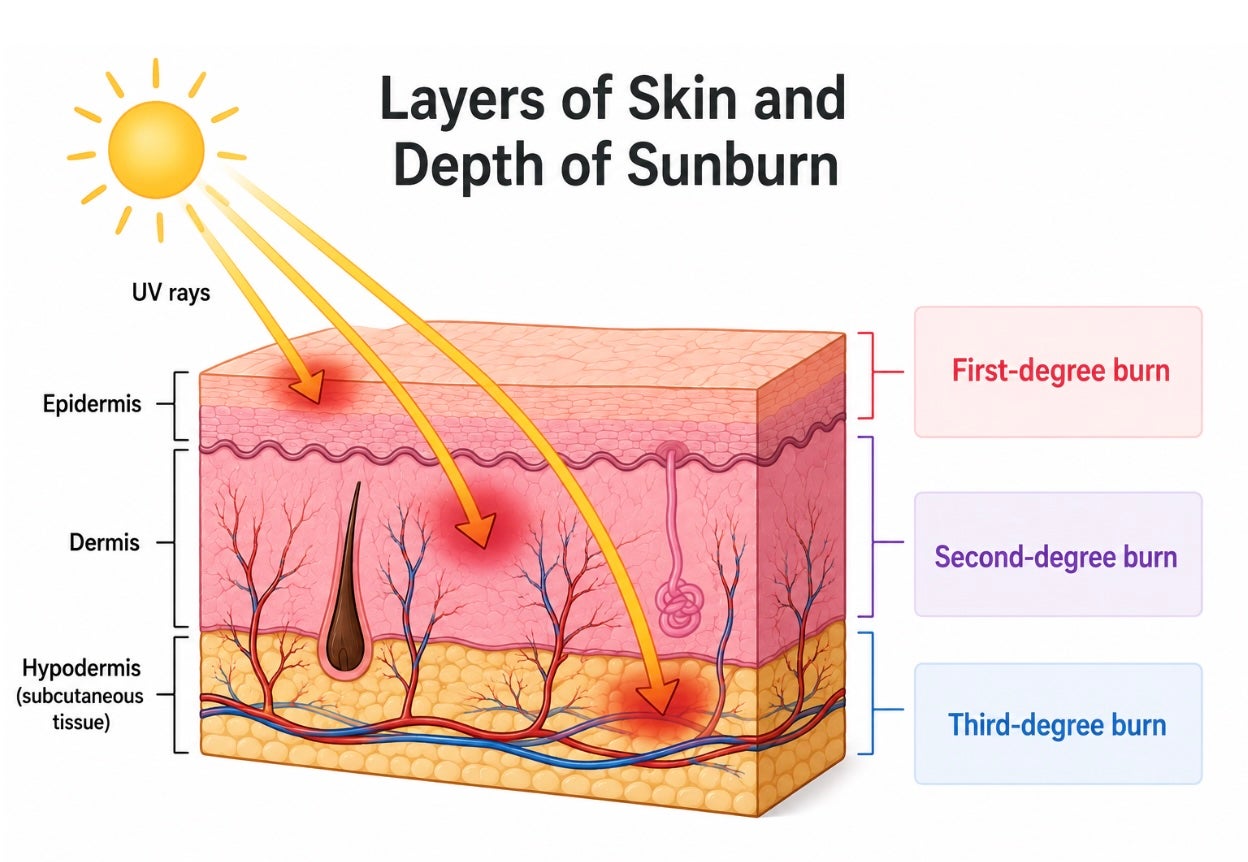
The good news is that a few simple habits can help protect your child. Here are three tips every parent should know about sunburns!
1. Prevent sunburn before it happens
The best way to treat a sunburn is to prevent it.
Try to keep children out of direct sunlight when ultraviolet (UV) rays are strongest, especially between 10 a.m. and 4 p.m. and when your child is outside, use several layers of protection. Have them wear lightweight clothing that covers their arms and legs, a wide-brimmed hat and sunglasses that provide UV protection. Whenever possible, encourage play in the shade.
Sunscreen is another important layer of protection. The American Academy of Pediatrics recommends choosing a broad-spectrum sunscreen with an SPF of at least 30. Apply it before your child goes outside and reapply about every 1.5 - 2 hours, or sooner after swimming, sweating or towel drying. Sunscreen should also be applied when playing outside year round. Sunburns can still happen in cooler weather.
Remember that sunscreen should not be used as a reason to stay in the sun longer. It works best when combined with shade, clothing and other sun-safe habits.
2. If your child gets sunburned, help their skin cool down
Even the most watchful parents may find themselves dealing with a sunburn. Mild, first-degree burns can be easily treated at home. If your child develops a sunburn, start by getting them out of the sun. A cool bath or cool, damp cloth placed on the skin can help relieve discomfort. Cooling gels or creams, such as aloe vera gel, can also help. Encourage your child to drink plenty of fluids, since sun exposure and hot weather can contribute to dehydration.
For pain, over-the-counter pain relievers, such as acetaminophen or ibuprofen, can be used according to your child's age and weight. Note that children under 6 months of age should not take ibuprofen. Follow the dosing instructions on the package or ask your pediatrician if you are unsure.
Keep your child's skin protected from the sun while the burn heals, and do not peel skin or pop blisters before they appear.
3. Know when to call your pediatrician
Most mild sunburns can be cared for at home. However, some burns need medical attention.
Call your child's pediatrician if the sunburn causes significant blisters, uncontrollable pain, fever, chills, headache or your child seems unwell. Severe sunburn can also cause dehydration or other heat-related illness.
If a baby younger than 1 year gets sunburned, contact your pediatrician right away.
The best protection is prevention. By making sunscreen, shade, protective clothing and hats part of your family's normal outdoor routine, you can help your children enjoy the sunshine while protecting their skin for years to come.
When in doubt, call your child's pediatrician. We're here to help your family stay safe, healthy and active all year long.
Images included in this blog were created with the help of AI.