Valley Children’s Commitment to Energy Resilience and Environmental Stewardship

Goals include net-zero carbon emissions and the largest pediatric healthcare-based renewable energy microgrid in the country
Our Commitment
At Valley Children’s, we believe caring for kids means caring for the world in which they’ll grow up. As Central California’s leading pediatric healthcare provider, we’re weaving sustainability into everything we do. By using resources wisely, embracing new ideas and working together, we’re reducing our impact on the environment, supporting the well-being of our community and helping to build a brighter, healthier future for all.

Artist's rendering of the future solar field on Valley Children's Hospital campus in Madera
Greenhouse Gas Inventory
Valley Children’s is now implementing plans for a bold new environmental strategy to accomplish two strategic priorities - to build energy resiliency for hospital campus operations and to drive efforts for improved air quality in the region. The plan will reduce greenhouse gas emissions by 50% by 2030 and will achieve net-zero carbon emissions by 2050. It also includes the installation of the largest pediatric healthcare-based renewable energy microgrid in the country.
Valley Children’s tracks and reports greenhouse gas emissions annually with our Fiscal Year Greenhouse Gas Inventory Report.
In FY 2025, the greenhouse gas emissions for Valley Children’s Healthcare amounted to 75,076 Metric Tons of CO2 equivalent (MTCO2e). Scope 1 emissions totaled 6,369 MTCO2e, Scope 2 emissions totaled 5,661 MTCO2e, while Scope 3 totaled 63,046 MTCO2e.

The table below lists Valley Children's Healthcare's enterprise-wide emissions sources from the highest percentage of total emissions to the lowest. This list serves as a guide for prioritizing action, focusing on addressing the larger emissions sources first.

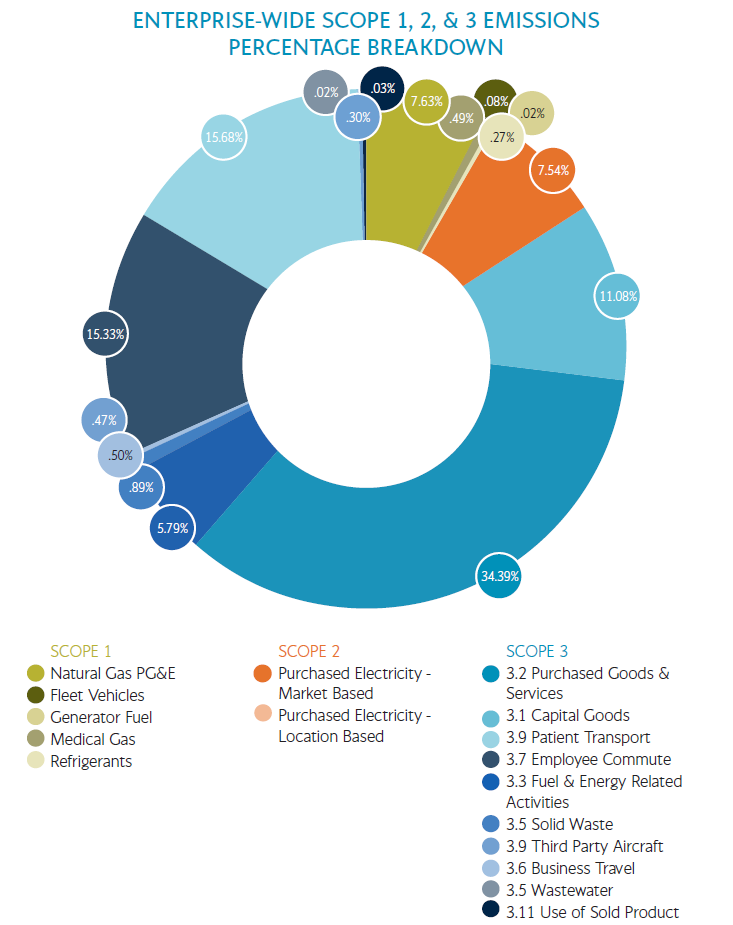
Valley Children's Hospital FY 2025 GHG Emissions Inventory


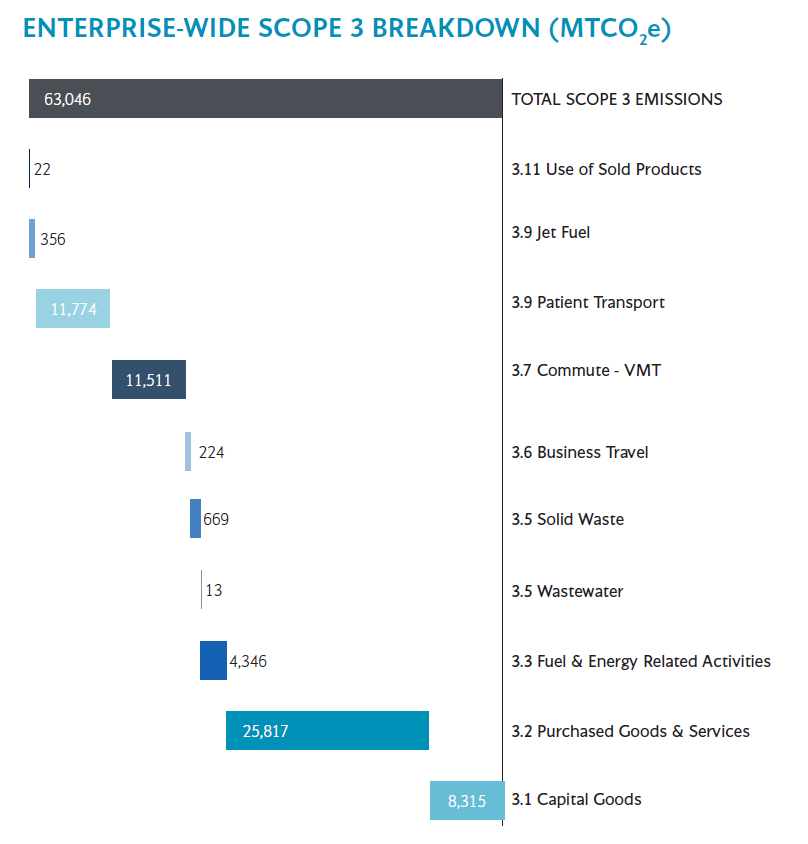
Valley Children's Hospital FY 2025 GHG Emissions Inventory
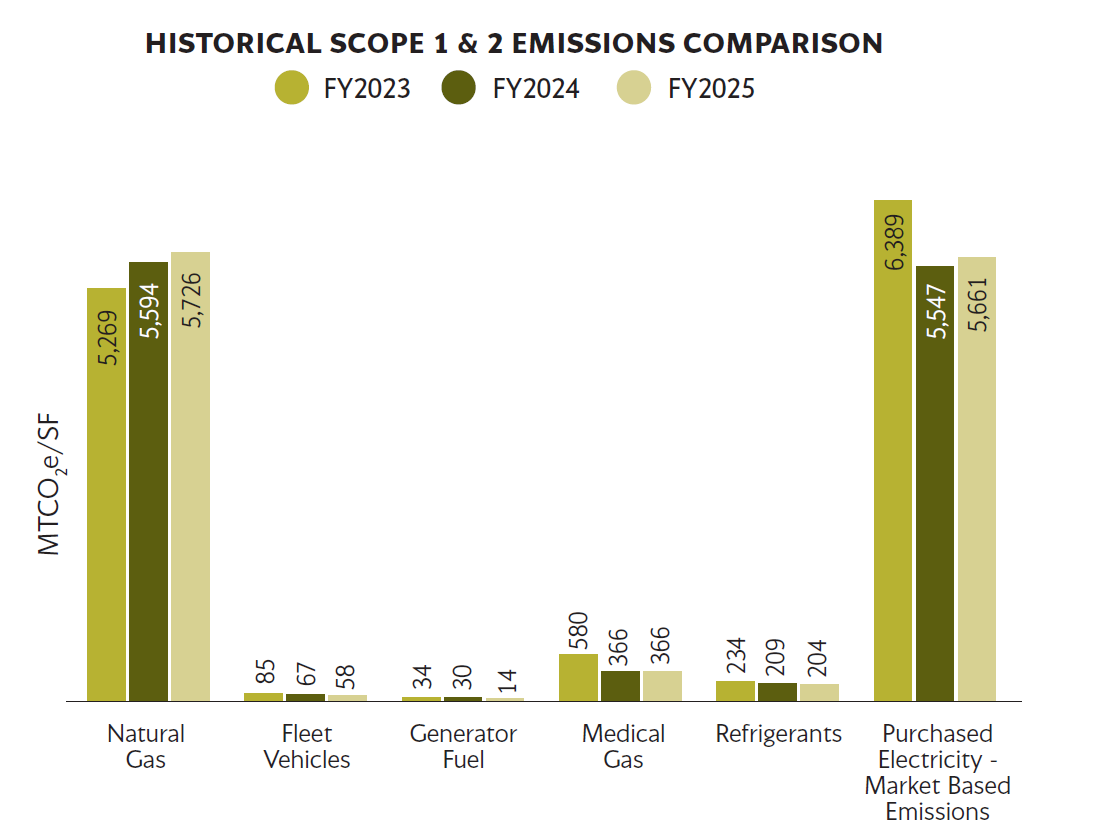
The table and graph below illustrate a comparison of Scope 1 and 2 carbon emissions at Valley Children's, offering insights into emissions efficiency.
In FY 2025, VCH’s total emissions decreased by 8.57% compared to the baseline year, FY 2023. This reduction was primarily driven by a notable decline in Scope 2 and Scope 3 emissions, which fell by 11% and 9%, respectively. Compared to FY 2024, the emissions increased by 0.96%. Further analysis revealed that electricity consumption at VCH increased by 2% and Scope 2 emissions showed a similar increase of 2%. Calpine Solution continues to integrate more renewable energy into its portfolio to align with California’s energy regulations, contributing to a cleaner regional grid.
Scope 1 emissions saw a 2% increase, primarily due to a 2% rise in natural gas consumption in FY 2025 compared to last year. All other Scope 1 categories experienced a decline in emissions with generator fuel emissions decreasing by about 50%.

Scope 3 emissions remained relatively stable between FY24 and FY25. Purchased Goods & Services continued to be the largest contributor, followed by Employee Commuting and Patient Transport, which together account for a significant share of total Scope 3 emissions. Capital Goods also represents a notable portion of emissions, reflecting ongoing investments in infrastructure and equipment.
Year-over-year changes were driven primarily by shifts in commuting and transportation patterns. Employee Commuting decreased by 42%, while Business Travel declined by 20%. In contrast, Patient Transport increased by 13.7%, continuing to be a major emissions source within Scope 3.
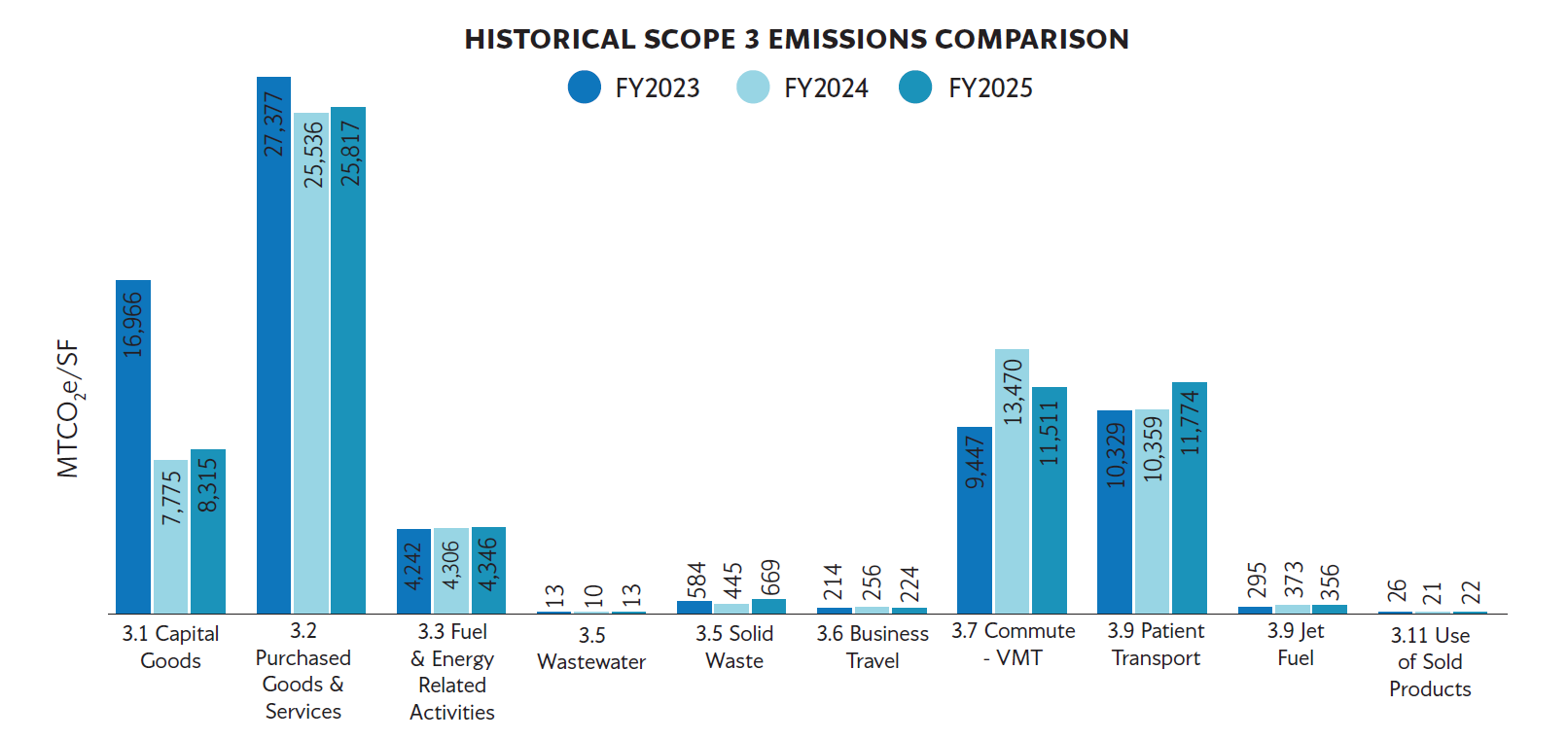
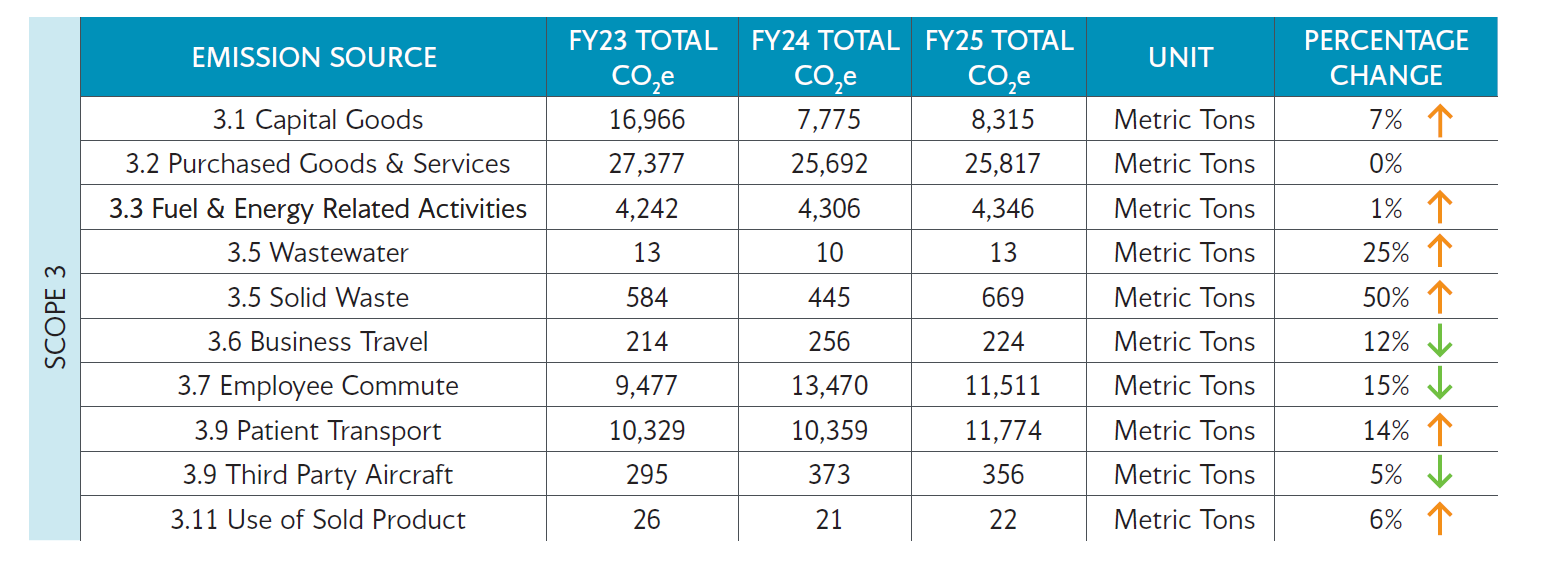
Valley Children's Hospital FY 2025 GHG Emissions Inventory
Key Initiatives
-

Energy Resilience
Creating a sustainable and clean energy strategy for the main hospital campus located in Madera, including the renewable energy microgrid that encompasses solar photovoltaics, fuel cells and battery storage.
-

Water Stewardship
We use drought-tolerant landscaping and water recharge strategies to conserve resources.
-

Fleet and Transportation
We are transitioning to electric vehicles and supporting alternative commuting options for staff.
-

Sustainable Procurement
Our purchasing policies prioritize suppliers with strong sustainability credentials.
-

Waste and Anesthetic Gases
We recycle blue wrap, reduce waste and use lower-impact anesthetic agents.
-

Health Disparities
We are developing a 10-year plan through the Valley Children’s Guilds Center for Community Health to effectively identify the health needs of Central Valley children. The plan will measure the impact of these interventions, through the lens of equity and concern for health disparities in the region.
Recognition and Partnerships
In 2024, Valley Children’s Hospital became the first hospital in California, and only the second children’s hospital in the nation, to be awarded the prestigious Sustainable Healthcare Certification by The Joint Commission, an independent non-profit accreditation organization. This landmark achievement recognizes Valley Children’s commitment to reducing its carbon footprint, combating climate change and actively pursuing crucial conservation and preservation initiatives.
Watch the video below to learn more about Valley Children's commitment to creating energy resiliency and addressing the impact of climate change on families.